

Modern society is shaped by technology, including automation, which is evident in healthcare, banking, and transportation.
In general, automation continues to change how people work and live by increasing efficiency and minimizing human error. Although some fears about its negative effect on jobs still persist, automation has actually generated new job opportunities, enhanced productivity, and protected humans from performing extremely dangerous tasks.
Based on these advantages, this article highlights the top 10 automation innovations that changed the world. Keep reading to learn more!
1. Car Manufacturing Assembly Line
By far one of the most consequential uses of automation is in automobile manufacturing. Ford Motor Company helped pioneer automated mass production with the introduction of the moving assembly line in 1913, and automation has continued to evolve throughout the automotive industry ever since.
This step eliminated the slow and expensive process of assembling thousands of cars yearly. It also allowed for the manufacture of more vehicles, increased domestic availability, and opened the door to exporting cars to the international market.
In the initial stage, assembly lines were basically workers performing specific tasks as conveyor systems slowly moved car parts that required coupling. This process lowered costs and reduced overall production time, making cars affordable for more individuals and families.
Since then, car manufacturing has been performed using robotic arms and other automation solutions.
2. Industrial Robotic Manufacturing
Most industrial-scale manufacturing uses one or more robotic arms at various stages of production. The systems are capable of assembling parts, painting, welding, and handling dangerous chemicals with great precision.
These systems ensure production consistency and speed, making them suitable for electronics, automotive, and engineering-based industries. In general, industrial robotic manufacturing has drastically enhanced global production efficiency.
3. Automatic Telephone Switching Scheme
Human operators were manually responsible for connecting calls via switchboards when telephone communication became a thing. As more people had telephones, manual switching became inefficient and really slow.
Over time, manually switching was replaced by automated switchboards, allowing for electronic connection of calls. This move made communication reliable, faster, and scalable to a wider audience.
It allowed for improved communication and served as the basis for modern-day telecommunication and eventually the Internet.
4. Banking Automation

The banking sector has immensely benefited from automation. In particular, ATMs (Automated Teller Machines) were possible as a result of advancements in automation.
This technology allowed customers to access funds directly from their accounts anytime and without needing to visit a physical bank. As such, access to this technology completely transformed the customer experience.
5. Computerized Reservation Systems
Manual reservation was a big problem across different industries. This process involved slow communication and physical paperwork between various agents and businesses.
In particular, keeping track of reservations was particularly problematic in the airline industry. Through automated computerized systems, airlines and other industries were able to manage seats, scheduling, and ticketing, allowing for effective management of travel and reservations.
As such, automating the reservation system has greatly enhanced business travel and international tourism.
6. Inventory Management Automation
Manual inventory management was challenging and tedious to perform, especially for large retail franchises with thousands of products on their shelves. However, the introduction of barcode technology forever changed inventory management.
Using this automated system eliminated manual product entry and inventory tracking, which minimized errors and time wasted. In addition, barcode scanners transformed checkout into an efficient and fast process, ensuring accurate real-time stock and price management.
7. Warehouse and Logistics Automation
E-commerce predominantly depends on warehouse automation. In particular, top businesses like Amazon extensively depend on automation systems and robots to organize, store, retrieve, and transport items.
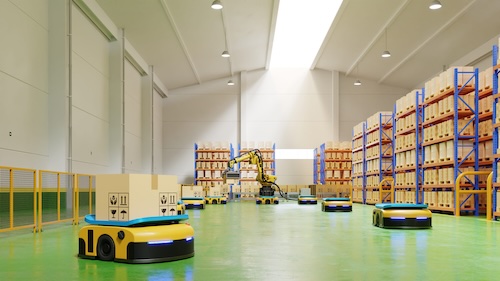
Adopting these automation solutions enhances inventory tracking, maximizes speed, and minimizes errors as robots are much better at storing and retrieving products than humans can. As such, Amazon and other similar companies are able to offer same-day shipping and other services due to access to these tools.
8. Smart Home Technology
Smart home technology leverages automation to deliver unique features to people. Examples of such automated features include automatic security systems, voice assistants, smart thermostats, and automated lighting.
Homes that implement these smart technologies prioritize convenience while enhancing overall energy efficiency.
9. Medical Diagnostic and Imaging Automation
Since the introduction of automation in medical diagnostics and imaging, patient care has never been the same. Advanced lab testing systems, CT scanners, and MRI machines have transformed how doctors identify a wide range of diseases accurately and quickly.
Using these automated technologies enhances overall patient care by minimizing healthcare professionals’ workload. Furthermore, it allows for large-scale processing of patient samples, aiding in the simultaneous treatment of patients.
10. Artificial Intelligence
Artificial Intelligence (AI) is currently the latest application of automation, which would eventually change how most things are performed across different industries. This technology can help with decision-making by predicting trends, analyzing data, and automating various tasks.
Due to its power, people across industries use AI to enhance customer experience and improve overall workflow. As this technology improves, it will continue to provide automation solutions that should further ease human endeavors.
Benefits of Automation
Despite a few drawbacks, automation has generally had a positive impact on human life. It continues to enhance accessibility to products and services, reduces costs, and enhances overall productivity.
It achieves this by eliminating repetitive tasks, allowing people to perform creative and skilled tasks. In particular, clinics and hospitals can easily improve calendar and staff management by leveraging tools like the Team2Book FMG Scheduling Software.
This tool enhances worker communication, workflow management, and lets clinic administrators concentrate on other aspects of management. When optimized for office space management, Team2Book can delay the need for a facility to move to a new and bigger location.
Conclusion
Automation has completely changed how humans live and interact with each other. It has made life easier and increased access to goods and services for a wide category of people.
Based on these benefits, this article highlights the top 10 automation innovations that have changed the world. It has also briefly presented why medical facilities require tools like the Team2Book Availability Scheduling App for calendar automation.