

In the past, medical clinics operated without software or electronic solutions. Staff relied on paper files, manual scheduling, and physical records for daily tasks.
Today, many in healthcare would find it difficult to work with these tools, especially administrators who manage complex schedules.
This article explores how medical clinics operated and the challenges encountered. It would also highlight why using solutions like the Team2Book Scheduling App is crucial for effective management of clinics and other medical institutions.
Clinic Management Before Medical Software
A few decades ago, medical clinics were managed using physical paper documentation. As such, patient details and histories were written on paper the managed and stored using shelves and archive rooms.
When a patient visits a clinic, the administrative assistant typically opens a new folder based on the patient’s information. During subsequent visits by the same patient, the folder must be physically located and taken to the doctor for medical consultation.
A missing result or chart can significantly delay consultation and possible treatment. Also, a doctor may have to retake important information and redo specific tests.
On the other hand, notes written by hand introduce another layer of complexity, as most doctors are notorious for having awful handwriting. In particular, other professionals may find it difficult to interpret notes during different stages of treatment.
Larger medical clinics and institutions may have a difficult time managing and tracking patient files. Furthermore, searching for specific patient information can be daunting without an electronic medical record system.
Instantaneously performing in-depth analysis is impossible manually without wasting hours searching and computing details from multiple files. As a result, the administrators found it challenging to perform such tasks efficiently without affecting productivity.
Clinic management generally in the past generally involved:
- Appointment management;
- Healthcare Professional and Room Management.
Appointment Management
Booking appointments for patients was an inefficient process in the past. The absence of online booking platforms meant that patients had to call to book a consultation with a doctor or any medical professional.
Appointments can only be booked during working hours and can only be done when a receptionist is at the desk to answer the call. At times, a receptionist becomes overwhelmed as they try to speak with multiple patients while others are on hold waiting to be answered.
Rescheduling an appointment is sometimes challenging, and missed calls mostly translate to lost bookings. In most cases, appointment management was done using:
- Wall calendars;
- Paper agendas;
- Notebooks;
- Whiteboards;
- Printed schedules.

As such, changes to appointments require manual adjustments, which are tedious and error-prone. Cancellation of a single appointment may require updates to various timeslots.
When a doctor is unavailable for consultation, the administrator or receptionist would have to update various records and contact each patient. Similarly, office spaces and consulting room assignments may have to be redone.
Ultimately, this process made appointment management error-prone and stressful.
Healthcare Professional and Room Management
Room scheduling and health personnel management have always been challenging processes due to the dynamic nature of the medical environment. The schedules of each professional and office space allocated to them are often interdependent, as rooms, diagnostic equipment, and treatment spaces are shared.
As such, clinic managers were responsible for manually:
- What room to allocate to each professional,
- Preventing double booking of office spaces,
- Managing rotations among specialists,
- Managing how to share equipment and other limited resources,
- Ensuring fairness during the entire process.
Problems Encountered Using Manual Clinic Management Techniques
A wide range of problems were encountered by clinic administrators when manual methods were solely used to manage medical facilities. Some of these issues included:
- Double booking occurred quite often as administrators were not always able to efficiently keep track of resource allocation and changes to calendars.
- Many consulting rooms and other office spaces sat empty due to a lack of access to real-time availability status.
- Direct and indirect bias occurred when allocating resources, as some professionals always got the best offices, while others found it challenging to find any space.
- The manual system led to inefficiencies and frustration among staff.
- Due to poor resource management, some administrators proposed relocating clinics to larger spaces because of the limited availability of rooms. In reality, the manual system prevented managers from optimizing available resources due to poor scheduling visibility, lack of usage statistics, and the room allocation process.
- Manual clinic coordination negatively affects overall clinic productivity. In particular, it boxes administrators into consistently concentrating on resolving scheduling disputes, updating allocations, searching paper records, compiling statistics, correcting errors, and answering various phone calls.
Modern Solutions to Manual Scheduling
Most medical clinics have adopted some modern tools to manage scheduling and resource allocation, involving portable devices and electronic management systems. Despite these improvements, many institutions still use spreadsheets, manual room assignment techniques, and shared calendars to manage scheduling.
Although helpful, these solutions do not fully eliminate scheduling bottlenecks. However, leveraging dedicated scheduling solutions can minimize any constrictions that may still exist.
Adopting the Team2Book Scheduling App
Clinics that adopted advanced software like the Team2Book Availability Scheduling App quickly transform schedule and resource management within their institutions. This tool goes beyond just replacing paper with software.
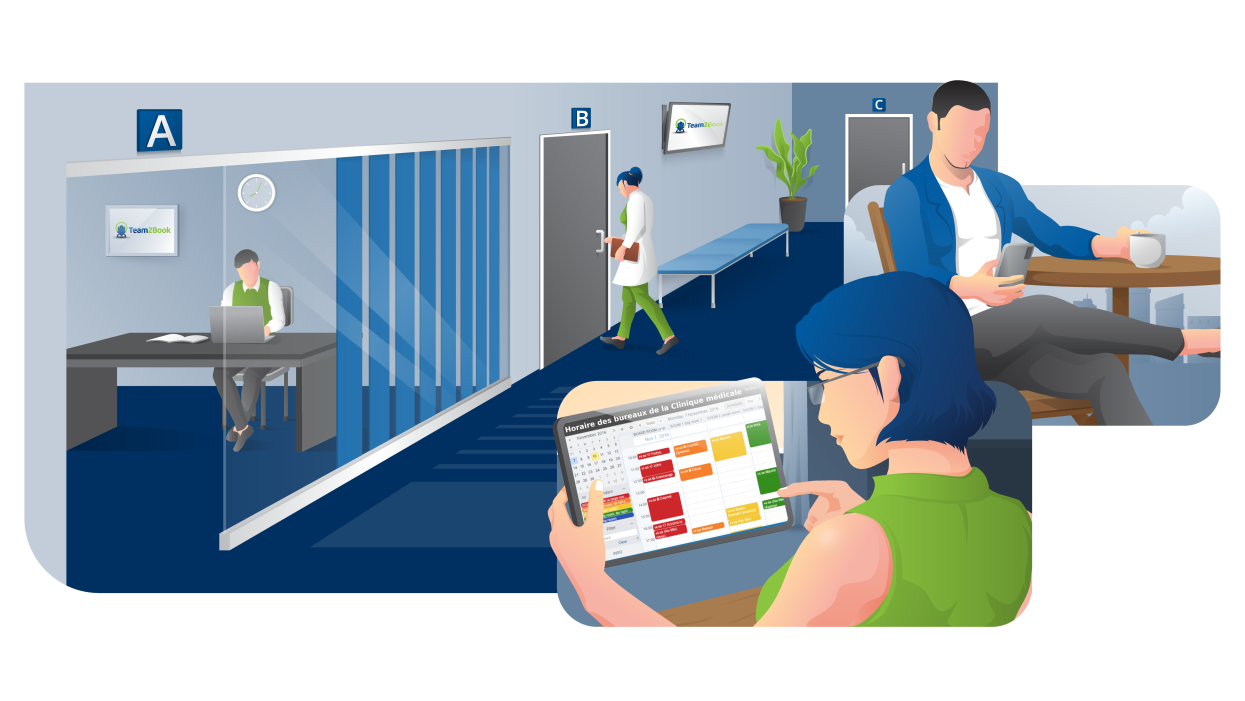
It offers clinic administrators a bird’s-eye view of institutional workflow, involving:
- Personnel scheduling;
- Room occupancy allocation;
- Real-time statistics utilization;
- Schedule conflict prevention;
- Fair resource sharing and distribution with minimal bias;
- Maximum office space utilization.
Adopting a centralized scheme like the Team2Book eliminates the need for paper agendas, manual spreadsheets, and reliance on people’s memories.
Instead of relying on memory, manual spreadsheets, or paper agendas, the clinic gains a centralized system that reduces errors and saves time. It eliminates costly decision-making like moving to a bigger location, especially when it is actually not required.
Conclusion
Gone are the days of using handwritten calendars and paper charts to manage scheduling in the medical industry. However, to ensure effective management, you would have to utilize solutions like the Team2Book Scheduling App.
It minimizes the need for handling scheduling manually, eliminating the risks of double booking, inefficient office utilization, and bias during resource allocation. Ultimately, switching to Team2Book enhances workflow and overall efficiency.